
by Mark Cole
Not economically viable
In the 1993 film Falling Down, a character is seen protesting outside a Savings & Loan. He’s smartly dressed in a shirt and tie and wearing a pair of suit trousers. But he’s carrying a large placard that reads “Not economically viable”.
This scene came to mind when I heard that my application for voluntary redundancy had been approved. Notwithstanding that this was something that I had actively sought, a depression descended as I processed what this meant at a personal and emotional level.
I reflected that the initial moderator in this phrase is irrelevant. In such circumstances, I can be compelled to leave my employment, or I can choose so to do. But either way, the employer is clearly stating that my services can be dispensed with. And it is a powerful reminder that the word “redundant” is a typical HR term freighted with emotion which gets bandied about without much thought.
For what it’s worth, I experienced being labelled in this fashion as inhumane, which partly reflects my psychology but also serves to remind us of the gap between espoused values and values-in-practice when we look at HR beyond the textbooks and in its corporate habitat.
The word redundant speaks to being superfluous, of not being needed. I was surprised how quickly these corrosive ideas bubbled to the surface of my mind. As a human resource, I had clearly reached a critical point where I was seen to be surplus to requirements.
The personal in the corporate
I took my first job in the NHS in 1980, when I worked as an operating department orderly. The four years that I spent in that post convinced me that this could be a corporation to which I could quite easily commit myself.
I finished there when I got the chance to study industrial relations – and then to matriculate to university and eventually complete my teacher training.
Thereafter, in 1990, I came back into the NHS, joining an employment development team working on behalf of West Lambeth Health Authority, looking to support people from groups traditionally discriminated against in the labour market from the three London boroughs around St Thomas’ hospital to secure jobs in their local NHS.
Since then, I have worked in and around health and social care across the course of my entire career, which to date adds up to 33 years of dedicated service in the field of workforce, organisation, and leadership development.
The past seven years have been the happiest and without doubt the most satisfying of all. But, where change takes place, we all of us have a responsibility to consider whether that will be good for us professionally and whether we accept that new direction of travel.
My reasoning was that the new direction will not be one that would suit me – and that future would not necessarily have a place for me where I’d maintain my current level of contentment.
So, while I may have volunteered for redundancy in light of this – and with a clear sense that I might find an opportunity to take forward my experience and expertise and continue to offer my talents and abilities to the NHS – I cannot escape the deeply emotional reaction that it has generated for me.
This separation after all this time impacts me in terms of feelings – and that distance is amplified by the presence of a 12-month covenant that means that I am unable to work for the NHS in any capacity.
Tell us how you’re feeling (on a scale of one to six)
This leaves me feeling unvalued, unwanted, and unthinkingly discarded. “That’s your fault, mate,” I hear some say. “Nobody made you take the cheque”.
True. I could’ve stayed and possibly spiralled into unhappiness. I could’ve watched my frustration climb until I inadvertently said what I was thinking in some public forum…and ended my long NHS career in corporate disgrace. I could have kept my lip buttoned and suffered the frustration of not being able to bear witness to my circumstances and how they were affecting me.
Importantly, I am prevented from bringing the experience and expertise that I have to market so that I might continue to do the work that has brought me such joy over the past seven years. Just because a few bad apples in the upper branches of the NHS tree leaped from one well-paid post, took a fat settlement, and landed promptly thereafter in another role with big bucks, I have to twiddle my thumbs for 12 months, even if NHS clients might want my services.
This amplifies the “redundantisation” (yes, I know, there’s no such word, because it’s a clumsy, ugly and very personal attempt to encapsulate my current experience) because it reminds me that the work is still there to be done but I am denied the chance to do it.
Organisations busy themselves these days with pumping out pulse surveys, temperature cheques, and staff surveys. If Rensis Likert were still with us, I wonder what he would make of a world that has taken his notion of a five or seven point scale and now uses that instrument to flatten human experience so that it can seemingly be expressed as a simplistic numeric value.
This crude aggregation of people’s presence in the world creates the illusion of paying attention. Importantly, it serves to strip out the actual experiences of people in the course of their lives and the complexion of their feelings in this context. How people are impacted by the workplace and it’s practices – and their deeply personal human reactions to those situations – are lost in this quantitative morass
This is why I wrote this: to say aloud what it is I feel about being at the sharp end of a supposedly rational corporate process, administered technocratically by HR. To talk openly about feelings when faced with a great deal of emotional management in organisational life.
How I feel
Three working days on, I am unable to carry the term “redundant” lightly. It has got under my skin and it is making me sore.
I chose redundancy…but I did not choose to be redundant. But that is how I feel stepping out of the end point of that process.
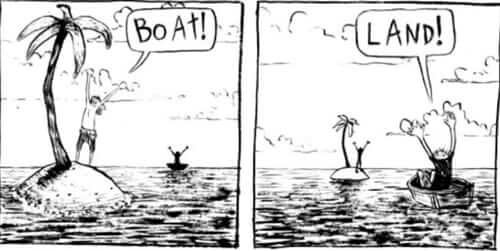
This is balanced by a sense of relief and exquisite liberation. The joy of escaping the constraints of corporate life have become apparent immediately.
If you want discussion and advice as to how best to attend to voice and silence in corporate life, to listen so as to hear about people’s experience and to seek to understand them, that is precisely the sort of work I will be looking to do from now on.
The alternative is merely to stick with the familiar routines, managing people as Human Resources without acknowledging the vital importance of putting humanity at the centre of that and squeezing people’s their voices into a meaningless number.
The latter is the line of least resistance; the former requires a significant and meaningful commitment. I’m happy to help people to achieve that level of commitment, if they are content to let me.

 Radical OD
1 thought on “Being redundant: Coping with the feelings of not being needed”
Comments are closed.