
A Crisis of Leadership
Last week’s presidential debate in the United States has raised all manner of issues on both sides of the partisan divide. Crucially, it saw a sea-change in respect to liberal opinion, with a good many who to date have seemingly been supportive in respect to Joe Biden’s campaign to be re-elected suddenly talking about a need for him to withdraw from the election in favour of another candidate.
Leading in Crisis
One of the names being bandied about as a late substitute for the November contest is Josh Shapiro, the governor of the state of Pennsylvania. Setting aside the pros and cons of these Democratic Party discussions as to who is best equipped to defeat the Republicans later this year, Shapiro is interesting because of a significant act of leadership that has raised his profile in respect to people considering who might step into the electoral context.
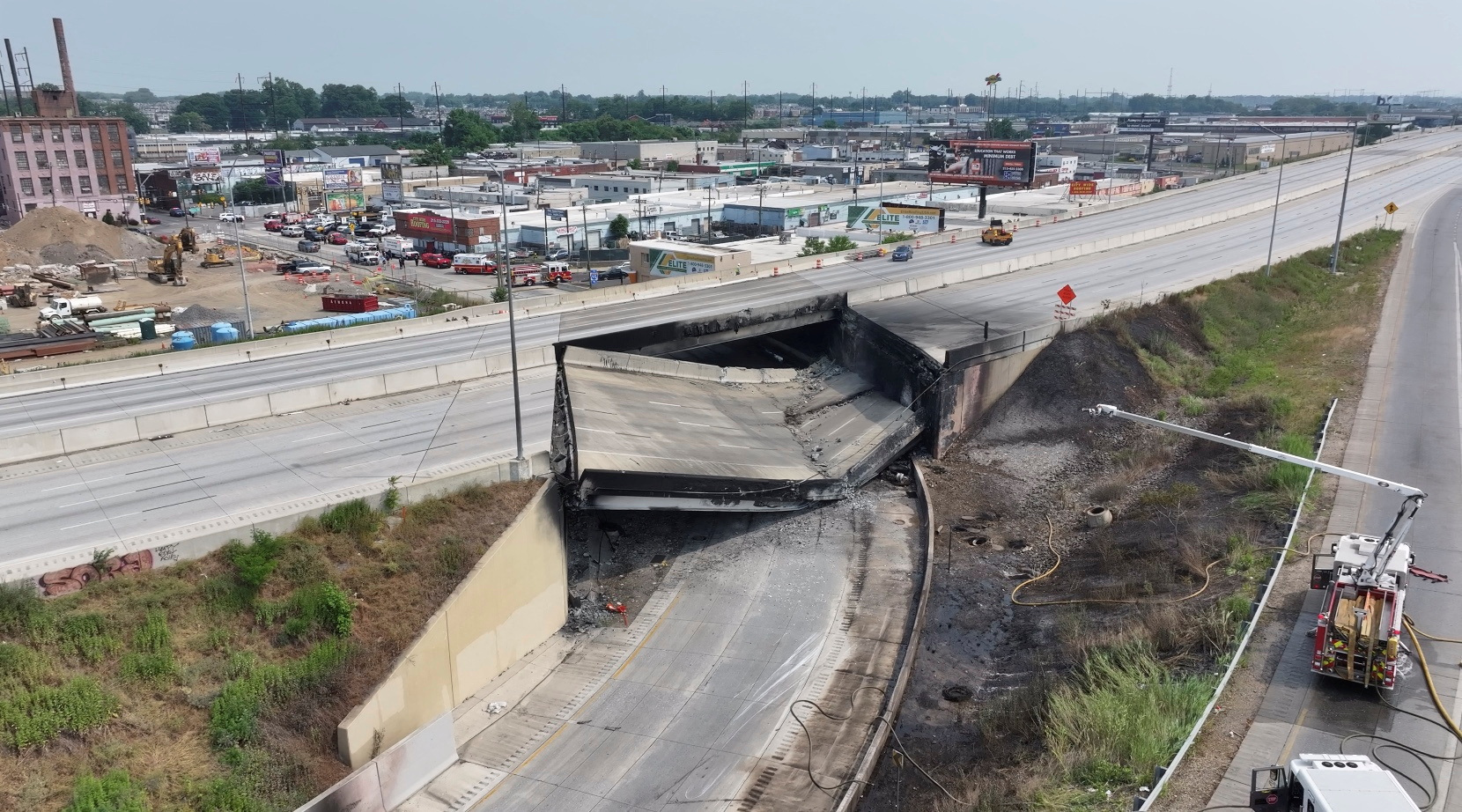
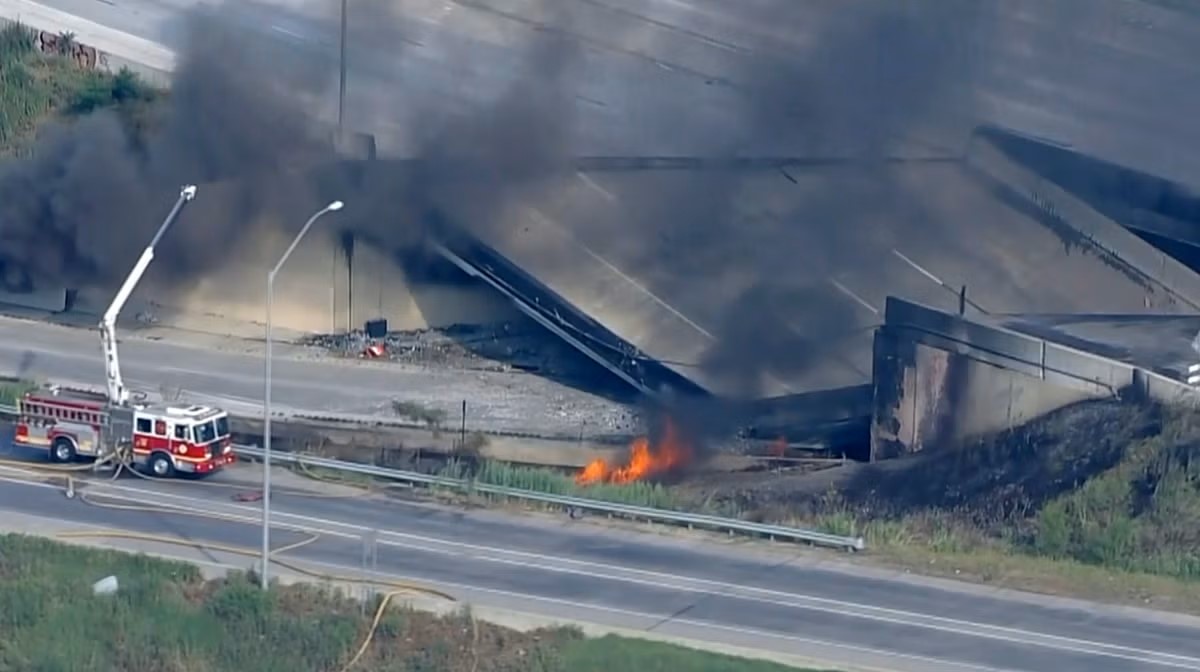
On 11 June 2023, a tanker carrying a significant cargo of fuel crashed into a bridge as it came off a busy freeway in the state. Interstate 95 (I-95) is a major route from New England down to Florida, with an emphasis on commercial traffic. As Adams et al (2023) explained in a transport oriented case study of the event, ‘In the immediate area of the crash, the roadway averages 160,000 vehicles daily, 12,800 being commercial trucks.’ Patently, speed was of the essence, in light of the destruction that the crash and fire had unleashed; it was vital that I-95 opened sooner rather than later.
On 24 June, ABC 7 New York, a media outlet, reported that the highway had re-opened the day before. The article explained that, ‘Interstate 95 reopened Friday less than two weeks after a deadly collapse in Philadelphia, a quicker-than-expected rebuild to get traffic flowing again on a heavily traveled stretch of the East Coast’s main north-south highway. Workers put the finishing touches on an interim six-lane roadway that will serve motorists during construction of a permanent bridge. Crews worked around the clock and wrapped up ahead of schedule, allaying fears the critical highway would be closed for many weeks. Traffic began flowing in one direction a little past 12:30 p.m. Friday, and all lanes were open a short time later.’
From Leader to Leadership
In such a complicated and bureaucratised context, how had this happened? Governor Shapiro outlined his view of events in a piece for the Washington Post that appeared online on 16 July 2023. In that article, he acknowledged that ordinarily major infrastructure projects invariably become snarled in the constraints and controls of detailed bureaucratic arrangements, which, in turn, reduce opportunity for creative and innovative responses to difficult circumstances.
Importantly, he made the following observation on which he patently sought to act: ‘After a critical stretch of Interstate 95 — one of the nation’s busiest highways — collapsed in Philadelphia in June, experts told me it would take months to get traffic flowing again. Instead, state and local leaders and project managers on the ground made decisions quickly, thought creatively and worked together to rebuild and reopen the highway in just 12 days.’ This clearly suggests that, instead of stepping into the situation and imposing structure, Shapiro – as the foremost political leader in the state – stepped back, thereby leaving space for people to do their jobs – and to engage in those tasks with a high degree of autonomy.
Obviously, to validate such a conclusion would require us to engage with everyone involved in the feat of reopening a destroyed freeway in less than a fortnight to hear about their respective experiences. But, at face value, it suggests that Shapiro made an active choice to move away from leader performance – being seen to lead in terms of quite traditional, structural, and hierarchical actions – in order to embrace lived leadership. This would have seen a practice transition from directive behaviours to supportive and connective ones.
It is also a useful reminder of how the leader occupies a structural role in most socio-economic contexts, often behaving in tightly defined ways and doing things that are expected of the role – yet at crucial points there is a need to actively step into leadership, a shift from a way of knowing and doing into a way of understanding and being. In fact, one might suggest that, in the changed circumstances that society faces at this time and with which business needs to keep abreast, contemporary leadership requires us all to step away from the structurally defined notion of the practice so as to embrace a more systemic view of our circumstances and their challenges.
Philip K Howard (2024) in his book entitled Everyday Freedom: Designing the Framework for a Flourishing Society, highlights this instance in respect to I-95 as a prime example of the positivity this this Howard is eager to promote in regard to government. He makes the observation that, ‘The key to the speedy repair was that Pennsylvania Governor Josh Shapiro declared an emergency and suspended all regulations that “would in any way prevent, hinder, or delay necessary action.” Overriding specific regulations and procedures let the state immediately hire a reputable local highway contractor to perform “extra work” on existing contracts, thus avoiding the need for competitive bids.’ (pp58-61)
Shapiro himself ascribes the success of this project to four key leadership decisions that he took in the face of these urgent and challenging circumstances:
- He granted a high degree of autonomy to managers of all elements of the overall programme to get traffic back onto I-95 as quickly as possible, removing the need for them to pass decisions up the line in respect to the wider bureaucracy.
- Alongside this, as Howard notes, the governor actively intervened to remove some of the constraints so that the bureaucracy itself was speeded up.
- Creativity was encouraged – and, in light of the openness regarding public communications that surrounded the project from the very start, in terms of where it was doing well but more importantly where it was getting stuck, he mobilised a wide range of support from across the state in terms of getting positive responses in terms of reactions and resources to each issue as it arose.
- He encouraged all of the agencies that were expected to contribute to solving this problem, regardless of their position in the wider terrain, to connect effectively. Local, state and national agencies coordinated their efforts – and trade unions stepped up alongside other contributors to support their members to undertake crucial elements of the necessary work at pace.
Crisis and Systemic Working
All of which resonates strongly with the discussions that I have been having with my colleague Eitan Reich about how best to support people to move away from traditional notions of leadership in order to embrace systemic thinking and a new perspective on what it means to lead in an overall situation where it is openly acknowledged that the world is uncertain and unknowable.
We are of the view that crises very often lead to familiar structures becoming unstable, a disruption that means that systems are very often forced to come to the fore. At those critical moments, people find new ways of thinking about and approaching the challenges that they face. Unfortunately, it seems to be the case that the flow of new relationships and practices ebbs back once the crisis is resolved.
The challenge then is to find a way in which those experiences can be isolated and explored, so that a deeper and richer understanding of what it means to work systemically emerges out of those reflections and that learning can then be more helpfully applied to business as usual, rather than solely to exceptional circumstances. You can access a copy of the white paper that we have produced in response to these careful considerations on this site via this LINK. I have also written a piece on this topic for the Integrated Care Journal, entitled Making Sense of Systems.
Regardless of how Josh Shapiro’s career shapes up, in the short term – in respect to being a potential presidential candidate should Biden withdraw – or on a longer term basis, there seems to be useful learning to be drawn from the way in which he and those around him approached the difficult problem of responding to unexpected circumstances and promptly resolving them.
 Radical OD