
A while back, I committed to taking part in the Birdwatch weekend that the RSPB organises annually. People are invited to spend an hour at their home between Friday and Sunday, watching for birds and taking a note of what they see and how many of them are seen. I’m fascinated by the wildlife that comes and goes in the garden, so enjoy taking part in this event.
On Sunday morning at 10am, I settled in my chair by the French windows with a cup of coffee, a notepad, and a pen. Elsewhere in the room, my 10-year-old son was immersed in playing the video game Fortnight, which to my ancient mind seems to consist of curious characters running around imagined landscapes and noisily firing weapons at one another, with the aim of killing each other.
So this was far from an hour of silence – although, as I sat there looking out at the greenery with no pressure on me other than to look at the world and see what was in it, I was reminded of the work that Megan Reitz and John Higgins published recently in light of their rich research into spaciousness.
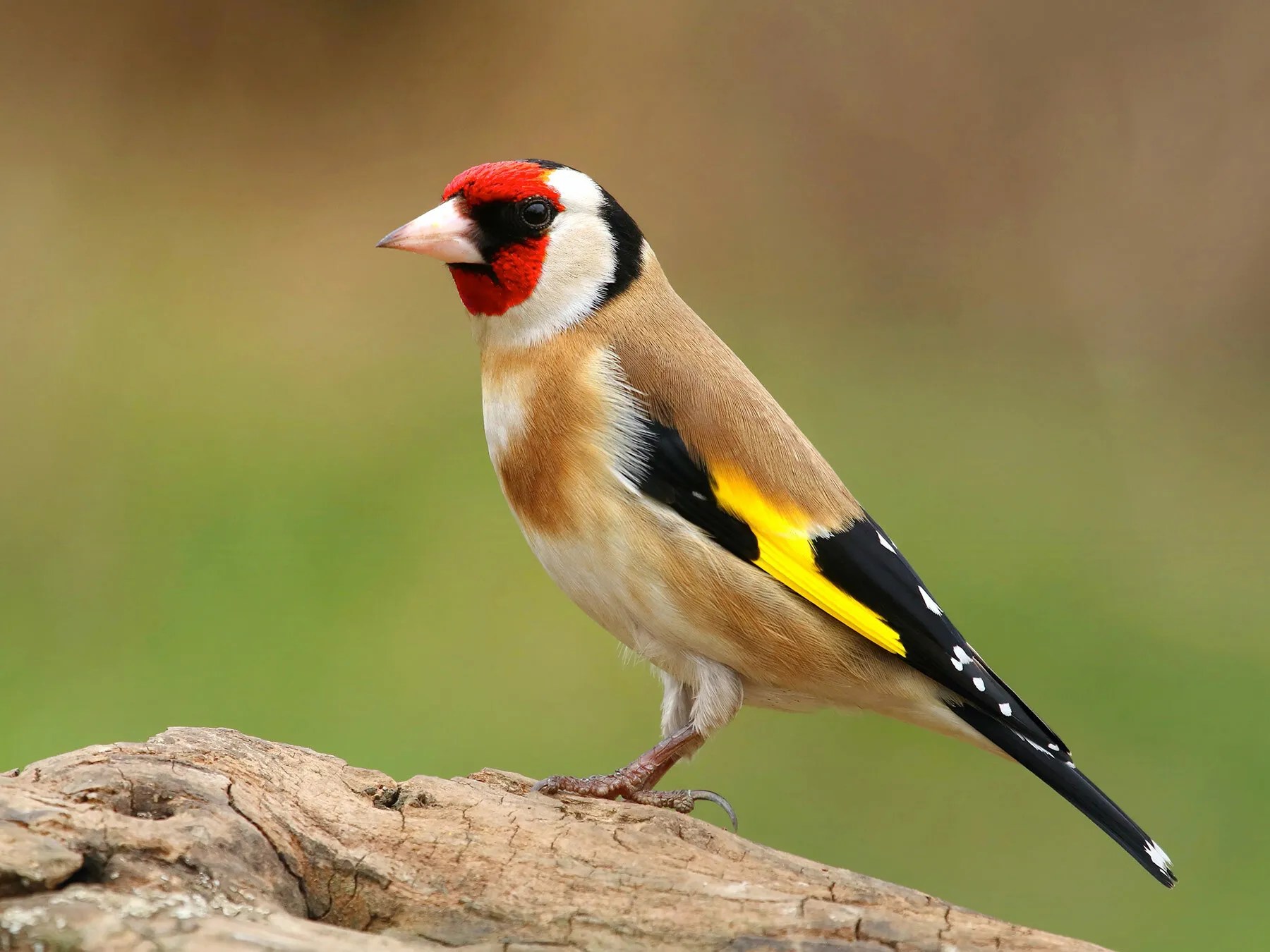
Goldfinch
In a world of constant busyness and information overload, this notion involves finding space and time away from the rollercoaster of the quotidian. This seems particularly important when we consider Daniel J Levitin’s (2015) observation that – at this time – we are confronted with an overload of information, to which we inadvertently continue to contribute. He articulates this as follows:
‘In 2011, Americans took in five times as much information as they did in 1986 – the equivalent of 175 newspapers. During our leisure time, not counting work, each of us processes 34 gigabytes or 100,000 words every day. The world’s 21,274 television stations produce 85,000 hours of original programming every day as we watch an average of 5 hours of television each day, the equivalent of 20 gigabytes of audio-video images. That’s not counting YouTube, which uploads 6,000 hours of video every hour. And computer gaming? It consumes more bytes than all other media put together, including DVDs, TV, books, magazines, and the Internet’ (p6)
Levitin’s work sees these developments as having a negative edge, insofar as we lack the mental capacity as human beings to process such a volume of data. He argues that we stand transfixed midstream of this data deluge, negatively affected in terms of our efficiency in the world, struggling to make decisions, and suffering an impairment of our creativity.
On Sunday, though, I found myself sitting unpressured in a spatial and temporal setting of my own making. I was away from the 24/7 buzz of contemporary life, which Jonathan Crary discusses in terms of the end of sleep and links this shift to the needs and expectations of late capitalism. I even deliberately set aside my phone and tablet, so that I wouldn’t be distracted. I sat mindfully looking out into the garden.
One thing immediately came to mind as I took up this position: I could be found not merely looking at nature but actively looking into nature. My view was going beyond the surface and into the depths of the tangled branches and brambles, and below the surface of the carpet of unswept leaves. The pause allowed me to move beyond my normal pictorial experience of reality, a passing and superficial glance at the reality of the life in which I find myself.
This took me a stage further – having noted the presence of three pigeons and two jackdaws thus far – insofar as it reminded me of the important difference between reflection and reflexivity. In an existential sense, I am not sitting behind the French doors with my Marmite toast and steaming coffee at an ontological distance from the world. Instead, I have recognised myself as an integral part of the wider ecosystem, despite my efforts to separate myself from it.
As I logged the appearance of two seagulls and then a magnificent red kite that hove into view, I realised that I was not viewing nature, I was actively communing with it. Yes, I was behind the glass and in the warmth…but my attention was fully absorbed by the place in which I found myself. It was not an environment that I was looking out on; it was instead a space that wrapped around me, despite me being “inside”.
When we think about the workplace as a similar sort of environment in which we find ourselves, it is far too often the case that we imagine ourselves as a visitor floating through it, as opposed to an integral element of that physical, relational and cultural context.
This is particularly important for those who occupy senior roles in an organisation and are seeking to think and work systemically, insofar as my choice to connect with nature for that hour on Sunday changed my perspective, allowed me to slow down and to think, and connected me better with the world.
This is what is urgently needed by everybody in corporate life.
This piece is illustrated with a picture of a Goldfinch, a bird of which I am particularly enamoured. They are also of interest in terms of understanding ecosystems, insofar as changes in terms of people actively feeding birds in their gardens and – specifically – what they provided in terms of that food meant that the goldfinch population in the UK increased significantly. As the British Trust for Ornithology website explains, ‘UK Goldfinch numbers have risen steadily in recent decades, as birds have taken advantage of bird food provided in gardens.’
A reminder that leadership is rarely straightforward – and requires an awareness that life in the moment is inevitably an ongoing experiment, particularly when trying to work systemically. By the same token, the traditional cause-and-effect model of management, wherein the assumption exists that Action A will inevitable lead to anticipated Outcome B, fails to acknowledge the uncertainty and unknowability that we face as we make our way through life…and hence the strong possibility of unintended consequences, of which we need to be actively aware in organisational life.
 Radical OD