
Two states
We want two states
North and south
Two, two states
Forty million daggers
Forty million daggers
Forty million daggers
Forty million daggers
The one positive of renting music these days from the money grabbing tech bros as opposed to possessing an actual artefact such as vinyl or a CD is that so much of the music I love – old and new – sits on my phone which links with my car stereo and can be listened to on shuffle.
The lo-fi garage band called Pavement was one of my faves back in the 1990s, so I was so chuffed when their track called Two States from 1992 popped up as I was driving recently. The music for me was, as ever, riveting – rough at the edges but rich at the core – but the fun lyrics suddenly spoke to me about the thoughts I am beginning to hold about the current socio-cultural circumstances in which we find ourselves, which is why I’ve opened this post with those details.
It resonated with my view that contemporary politics is blighted by an amplification of the tendency in this field for dichotomies to prevail thanks to people’s faith-like adherence to contrary ideologies. This has always been the case, of course, but the effect is particularly pronounced in the present-day political discourse.
So, if you find yourself drawn to the ideas and policies that undergird Trump’s second presidency – as many in the US electorate patently did – you are likely to be disdainful of a world view that pivots around a particular view of social justice…and vice versa. A similar effect can be discerned in the UK between supporters of both Reform UK and the Green Party. There is no attempt at engagement on either side, instead they are both merely hiding behind bellowing insults at one another.
The idea that – in respect to developing a sizeable coalition around the ideas to which one shows an allegiance – one might seek to engage with those who appear to take a contrary view in order to open dialogue with the potential for listening to the perspective of others and sharing with them why you might take a different view is largely absent from civic society at this time.
Taking Sides
Which side are you on?
Which side are you on?
My daddy was a miner
And I’m a miner’s son
And I’ll stick with the union
‘Til every battle’s won Which side are you on?
Which side are you on?
They say in Harlan County
There are no neutrals there
You’ll either be a union man
Or a thug for J. H. Blair
Which side are you on?
Which side are you on?
Oh, workers can you stand it?
Oh, tell me how you can
Will you be a lousy scab
Or will you be a man?
Which side are you on?
Which side are you on?
Pete Seeger, Which side are you on?
I was introduced years back to this particular song by Billy Bragg’s drastically revised version that appeared in 1984. It was originally written back in 1931 in Kentucky by a woman called Florence Reece who found herself caught up in a local miners’ strike where her husband was a union rep. Billy made it a protest song in response to the Thatcher administrations assault on trade union rights…but – in the spirit of the time which may well be said to persist – gendered his altered chorus as follows:
This government had an idea
And parliament made it law
It seems like it’s illegal
To fight for the union anymore
Which side are you on, boys?
Which side are you on?
Which side are you on, boys?
Which side are you on?
We set out to join the picket line
For together we cannot fail
We got stopped by police at the county line
They said, “Go home boys or you’re going to jail”
Which side are you on, boys?
Which side are you on?
Which side are you on, boys?
Which side are you on?
Billy Bragg, Which Side Are You On?
Denying Discourse
One year when I was at university doing my first degree in politics, the traditional annual student union elections – ordinarily contested by the full range of mainstream political organisations, including the Labour Club of which I was an active member – saw the appearance of a new grouping which – as I recall – branded itself as the Party Party.
When polling closed, there was an evening event where all the votes were counted, results declared, and celebrations and partying occurred amongst a large group of students in attendance. This included me and several of my friends from the Labour Club, including a wonderful fella called Sean.
As the results were declared, Sean and I became more and more peeved by the fact that, whilst Party Party did not look set to win any office as a result of these elections, they had attracted a number of votes. As the announcements indicated that a significant number of people in the electorate had cast their ballot for this new grouping, I found myself joining with Sean in loudly and endlessly chanting the chorus of “Which side are you on?”
I now see that my reaction at that time – supported by my lively connection in the moment with Sean – arose out of a sense of irritation in light of the fact that I personally thought this sort of electoral politics to be serious and important, whereas the new party seemed to take an altogether opposing view in this regard. I was also irked, I think, by the fact that I ended up feeling as though Party Party had stolen votes from my Labour Club simply because of their frivolous presence in the contests.
Overall, at a personal level, I felt defensive as opposed to inquisitive: instead of taking time to consider why a significant number of my peers had opted to cast their ballot in this way, I merely hunkered down into my own personally unquestioned beliefs – including a commitment to “no platforming” any speaker invited to campus with whom those with whom I united disagreed – and crudely denigrated those who had supported Party Party instead of inviting a discussion as to why and where our common ground might exist.
I am embarrassed to concede that my reflections now are that there was something totalitarian about my behaviour that evening. Sean and I moved back and forth in the space, pushing others back, while at the same time filling it with our loud voices. In undertaking the latter, it saw our simplistic opinions dominating what was happening there at that time – and consequently silenced other voices who patently did not feel able to challenge that way in which our chants were dominating the room.
Where seemingly ideologically contrasting populist perspectives arise in opposition to one another, we often see their respective group cohesion expressed in one of two ways: some declare that they are speaking on behalf of a silenced majority whilst others assert that their position puts them on the right side of history. Both perspectives indicate how contemporary extreme politics in capitalist society embrace irrational belief and undeniability – and that such political viewpoints have more in common with faith and religion than they do with an enlightened approach to public debate.
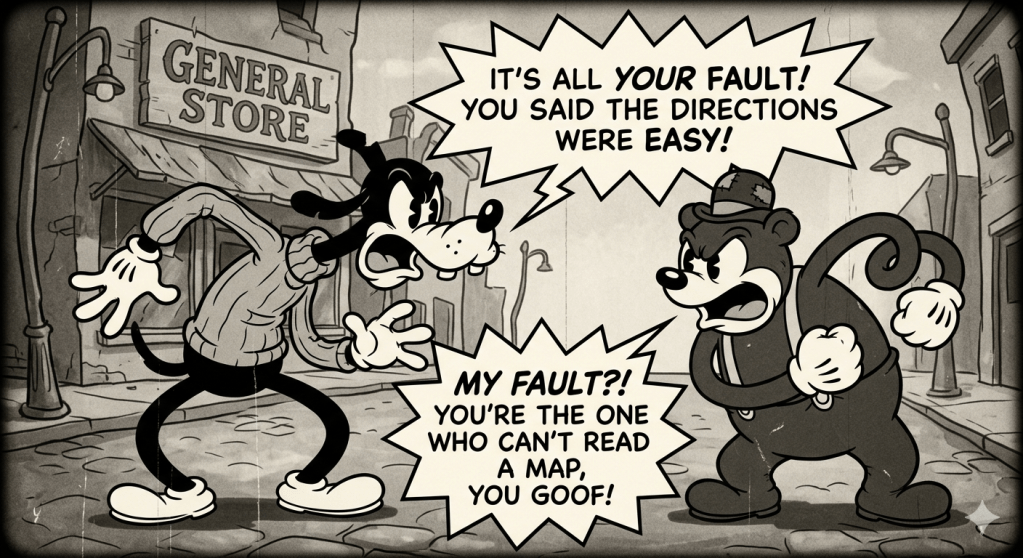
In his 2022 book that explores what he describes as the new political capitalism, Joe Zammit-Lucia makes the following pithy analysis of the circumstances in which we currently find ourselves: ‘We all have a tendency to be tribal. To believe that our tribe is somehow different – and better. Locked in our bubbles of friends and colleagues who are like us, our biases tend to grow rather than wane, leading to a collective belief in the essential righteousness and superiority of our own perspectives.’ (p16)
He underscores this observation through a later commentary on how social media affects this tribalism. In this regard, he states that ‘The rise of an uncontrolled and seemingly uncontrollable social media environment has not only degraded any concept of truth and honesty but has had a big cultural impact, positive and negative. Positively it has given voice to many who previously had no discernible political voice. Through the creation of echo chambers and the erosion of basic civility between people who hold different views, it has also enabled greater political and social polarization.’ (p29-30)
Interestingly, my friend and colleague Cheryl Samuels had posted a fascinated item on LinkedIn on 5 May 2026 which highlighted the fact that it was reported that the use of Artificial Intelligence had led to a 230% increase in terms of complaints submitted to local authorities. This was placing pressure on those working for councils in terms of responding to the increased number of grievances. But it was also suggested that access to this technology was giving people confidence to articulate their issues, instead of feeling culturally repressed by the elitist expectations of how such issues should be articulated.
Isolated Voices
There is something to be said for ordinary people being able to find their voices in a society that makes a lot of noise about people speaking up, yet – in terms of sustaining the current experience of power across society, in terms of both positional perspectives and collective oppression – it signally fails to create meaningful circumstances in which people can use their actual voice so as to speak out instead of having to sound like the people with whom they are attempting to communicate. Certainly, AI will emulate the style, structure and expectations of the dominant discourse so that people’s complaints will not look out of place. However, at the same time, it reinforces that dominant discourse by compelling people to use technology to initiate a formulaic exchange instead of allowing a polyphony of voices to emerge and to be actively listened to and meaningfully engaged with.
To that extent, this increase in complaints cannot be seen as a meaningful challenge to the iniquitous system that undergirds the experiences on both sides of that equation. Instead, it can be viewed as a reinforcement of the way in which things are expected to be done, which has the potential to constantly reproduce the whole socio-economic ideology that undergirds contemporary life.
My second concern is that outsourcing this formalised engagement with a social structure in this way deprives the complainant of the vital opportunity to find their own way of placing legitimate demands on the world. Finding one’s voice in terms of speaking aloud or through the sharing of textual observations is about mobilising your own intelligence as opposed to relying on a technological simulacrum of intelligence. Crucially, the act of writing is an exercise of thinking out loud: merely chucking prompts into a programme denies us the opportunity to deeply reflect, to make sense of the circumstances that we face, and speak to the world in a way that genuinely reflects how we see our life and the experiences that we are having.
Lastly, generating a reliance on AI can also be seen to be depoliticising the existence of a wide range of complaints – and the way in which the authorities to whom one is making one’s observations sit in a wider world of constraint, restraint and denial. First and foremost, it is a prime instance of neoliberal capitalism seeking to sanitise complaint and to ensure that the focus is exclusively on an individual whose manufactured complaint is simply absorbed and processed by the bureaucracy. By honing in on the individual, it closes off the opportunity for people to come together in order to find a collective voice that offers a critique that goes to the heart of what is seen to be happening in society.
Behaving Differently in Dialogue
All of which leads to a critical analysis, namely that, whether in a social, political or corporate (either as a member of the workforce or of the management) context, it is vital that we:
- Break free of the tribalism that denies the need to acknowledge and engage with alternative perspectives and stigmatises those whose opinions differ from our own instead of reaching out to them to explore their thinking and to share our own.
- Stop fetishizing belief in a way that privileges one position and, in so doing, denies the presence and plausibility of other perspectives.
- Set aside silencing in terms of denying the presence of different viewpoints in order to embrace the idea of allowing space for other voices to be properly heard and engaged with.
- Step away from the privileging of the individual in order to reconnect once more with the importance of collectivity, in terms of allowing for discussion and offering the opportunity for apparently alterative views to co-exist without one oppressing all of the others.
- Emphasise the need to focus on collective intelligence, with idea and potential responses arising out of space and time where open conversation is actively encouraged – and, at the same time, stress how a throng of individual voices will never be as effective in terms of creating social change as a collective in constant dialogic development that acts on the basis of a carefully considered critical analysis and proposal for being actively different in the world.

